The #1 Gap that Prevents Your "Single Source of Truth" From Working
The #1 Gap that Prevents Your "Single Source of Truth" From Working
The #1 Gap that Prevents Your "Single Source of Truth" From Working
The #1 Gap that Prevents Your "Single Source of Truth" From Working
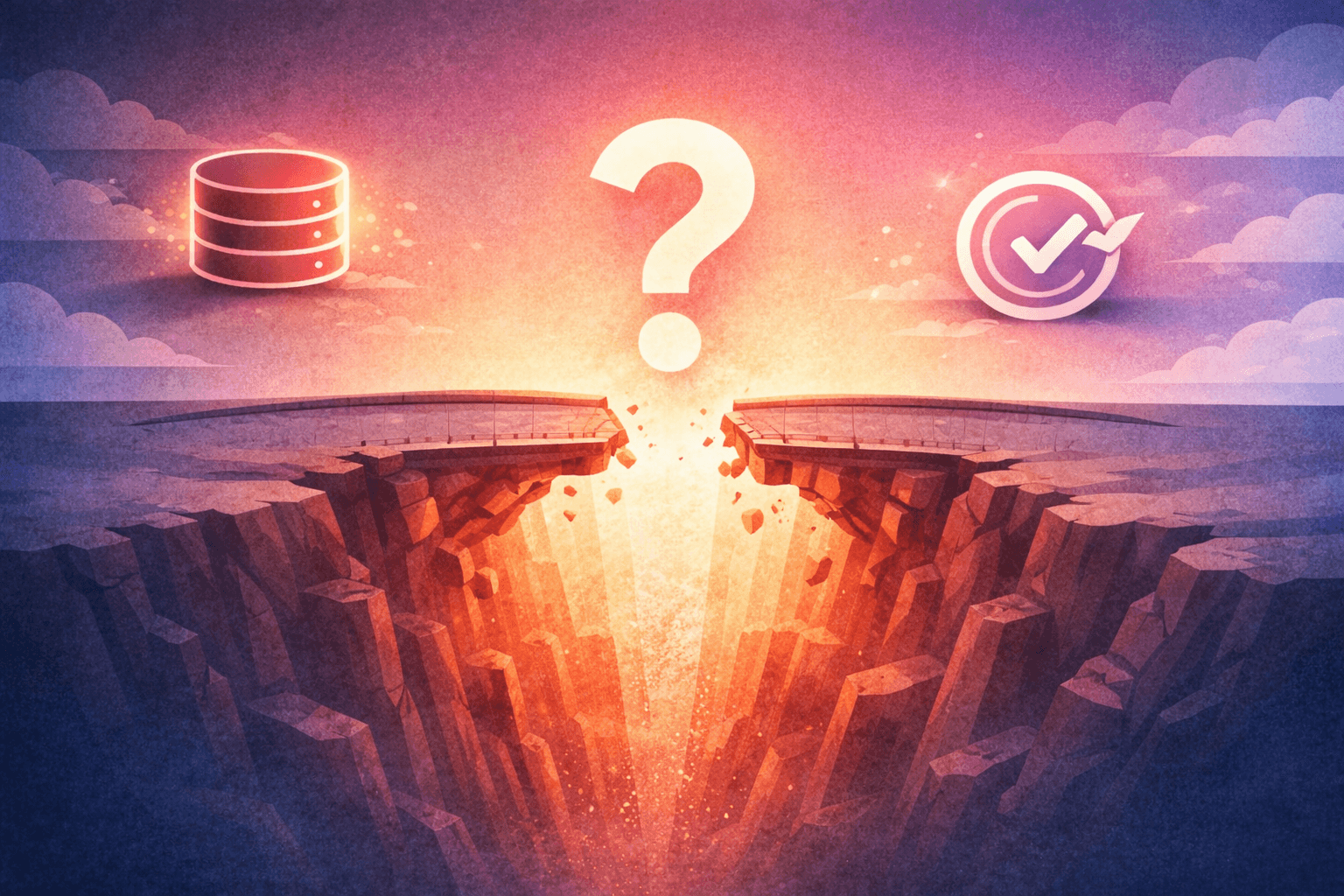
The idea of a single source of truth is appealing because it promises one authoritative place where everyone can rely on the same information instead of arguing over versions.
And yet, if you are honest about how contract work actually plays out, you know something is off.
Your contracts may be centralized, but questions still take too long to answer. Legal ops still fields ad hoc requests for lists and counts. Procurement still exports data to spreadsheets to understand renewals or obligations. Executives still get answers that come with qualifiers.
That gap is the difference between having a single source of truth and having a usable source of truth.
Why single source of truth breaks down in contract operations
The problem is not that SSOT is wrong. The problem is that contracts expose its limits faster than most other data types.
Contracts are not just records. They combine structured information like dates, values, and counterparties with unstructured legal language that carries the actual meaning. A repository can store documents perfectly and still leave you unable to answer questions that depend on interpretation.
This challenge is well understood in data management more broadly. Modern Data Company highlights in its discussion of creating a single source of truth that integration and governance complexity often make centralized systems hard for frontline users to work with, even when the data itself is technically correct.
In contract operations, that friction shows up quickly because most questions are not simple lookups. You are rarely asked to retrieve a document. You are asked to explain what the contracts collectively mean.
Examples legal ops and procurement hear all the time include:
Which contracts require action this quarter
How common a particular clause is across the portfolio
Where renewal terms expose the business to risk
Which agreements deviate from standard payment terms
A single source of truth can tell you where the contracts live. It does not automatically tell you how to answer those questions.
Understanding what makes a repository truly functional starts with evaluating the right contract repository software and what separates storage from usability.
Why contracts are uniquely hard to make usable
Part of the issue is the nature of contract data itself. Much of what matters in a contract lives in unstructured text. Definitions, exceptions, obligations, and negotiated language do not fit neatly into rows and columns.
General data literature explains why this is hard. Wikipedia’s overview of unstructured data describes how information without predefined models is difficult to query and analyze using traditional systems.
Contract teams feel this every day. You might have a renewal date captured as a field, but the real risk sits in the notice requirements buried in the clause. You might know the contract value, but the exposure depends on how liability is defined.
Turning that language into something you can reason over requires interpretation, not just storage. That is why contract data extraction exists. Brightleaf’s guide to contract data extraction explains the process of pulling terms like parties, dates, obligations, and renewal logic out of contract text so they can be analyzed consistently.
A single source of truth that only stores documents leaves this work to humans.
How Concord Horizon closes the usability gap
This is where Concord Horizon takes a different approach. Horizon is built around the idea that contracts should be usable, not just centralized.
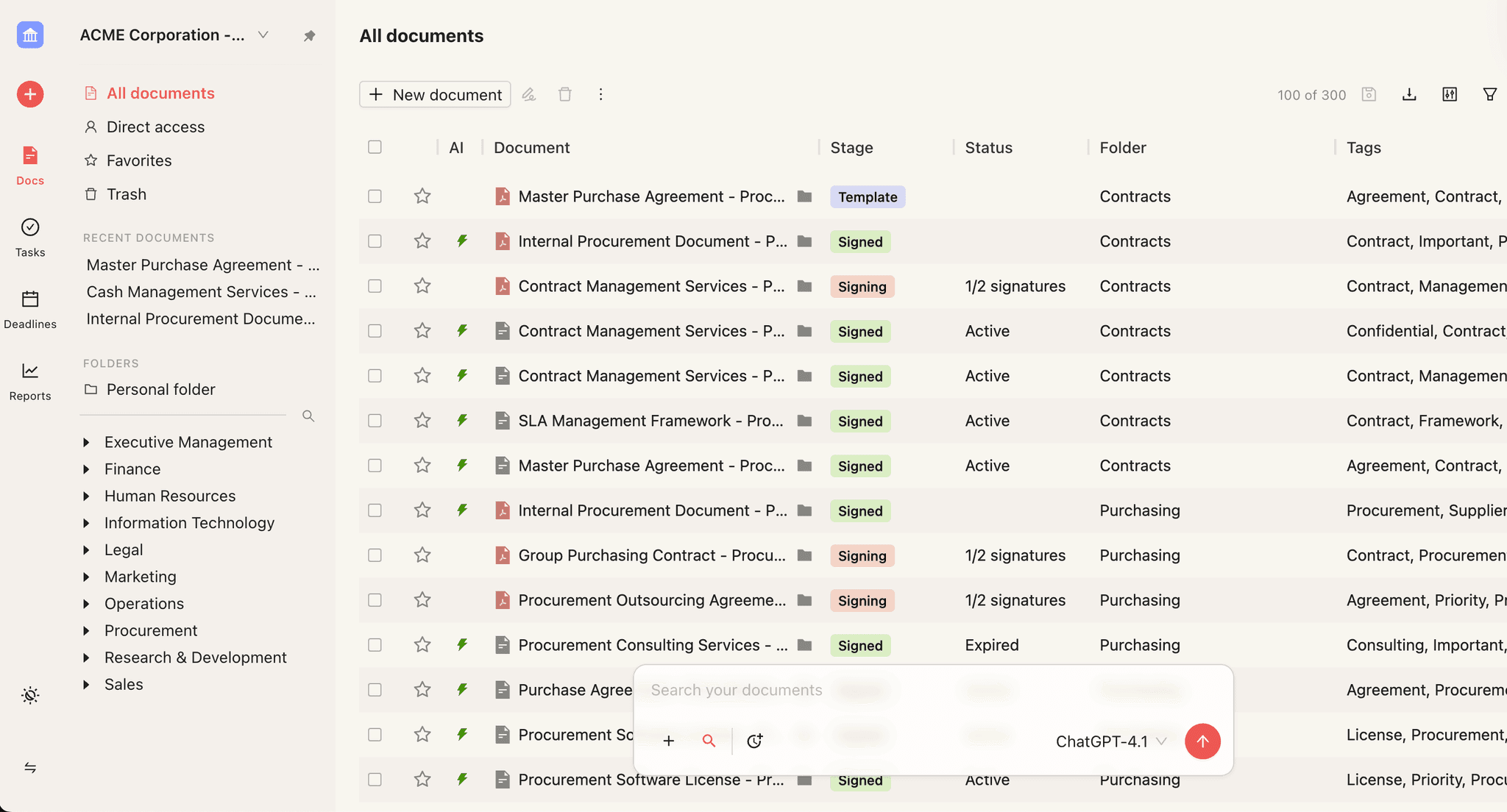
Horizon introduces conversational access through AI Copilot, which changes how you interact with contract data. Instead of navigating tables and filters, you ask questions the way you already think about the problem.
AI Search supports exploration. When you are investigating patterns or looking for examples, you can search by meaning across contract language rather than relying on exact phrasing.
AI Reporting handles the other side of the work. When you need completeness and trust, reporting operates on structured data so outputs are deterministic and repeatable.
This distinction matters. Exploration helps you understand what is happening. Reporting helps you decide what to do.
Horizon also extends usability beyond the CLM itself. Through MCP, contract intelligence can be accessed in other AI tools where planning and analysis already happen. That means your source of truth is not trapped in one interface.
Why this changes things for legal ops and procurement
For legal ops, a usable source of truth reduces the constant drag of manual reporting. Fewer ad hoc requests mean more time spent on governance and improvement instead of data wrangling.
For procurement, usability shows up as earlier visibility. You can see renewal and obligation patterns before leverage is lost, rather than after deadlines pass.
For executives, it means answers without qualifiers. When insight is reliable and timely, decisions move faster.
Centralized is not the finish line
A single source of truth reduces disagreement. That is valuable. But it does not automatically reduce friction.
A usable source of truth does. It shortens the distance between question, answer, and action.
If your contracts are centralized but still hard to work with, the issue is not effort. It is usability. Horizon is built for that next step, turning centralized contracts into intelligence you can actually use.
The idea of a single source of truth is appealing because it promises one authoritative place where everyone can rely on the same information instead of arguing over versions.
And yet, if you are honest about how contract work actually plays out, you know something is off.
Your contracts may be centralized, but questions still take too long to answer. Legal ops still fields ad hoc requests for lists and counts. Procurement still exports data to spreadsheets to understand renewals or obligations. Executives still get answers that come with qualifiers.
That gap is the difference between having a single source of truth and having a usable source of truth.
Why single source of truth breaks down in contract operations
The problem is not that SSOT is wrong. The problem is that contracts expose its limits faster than most other data types.
Contracts are not just records. They combine structured information like dates, values, and counterparties with unstructured legal language that carries the actual meaning. A repository can store documents perfectly and still leave you unable to answer questions that depend on interpretation.
This challenge is well understood in data management more broadly. Modern Data Company highlights in its discussion of creating a single source of truth that integration and governance complexity often make centralized systems hard for frontline users to work with, even when the data itself is technically correct.
In contract operations, that friction shows up quickly because most questions are not simple lookups. You are rarely asked to retrieve a document. You are asked to explain what the contracts collectively mean.
Examples legal ops and procurement hear all the time include:
Which contracts require action this quarter
How common a particular clause is across the portfolio
Where renewal terms expose the business to risk
Which agreements deviate from standard payment terms
A single source of truth can tell you where the contracts live. It does not automatically tell you how to answer those questions.
Understanding what makes a repository truly functional starts with evaluating the right contract repository software and what separates storage from usability.
Why contracts are uniquely hard to make usable
Part of the issue is the nature of contract data itself. Much of what matters in a contract lives in unstructured text. Definitions, exceptions, obligations, and negotiated language do not fit neatly into rows and columns.
General data literature explains why this is hard. Wikipedia’s overview of unstructured data describes how information without predefined models is difficult to query and analyze using traditional systems.
Contract teams feel this every day. You might have a renewal date captured as a field, but the real risk sits in the notice requirements buried in the clause. You might know the contract value, but the exposure depends on how liability is defined.
Turning that language into something you can reason over requires interpretation, not just storage. That is why contract data extraction exists. Brightleaf’s guide to contract data extraction explains the process of pulling terms like parties, dates, obligations, and renewal logic out of contract text so they can be analyzed consistently.
A single source of truth that only stores documents leaves this work to humans.
How Concord Horizon closes the usability gap
This is where Concord Horizon takes a different approach. Horizon is built around the idea that contracts should be usable, not just centralized.
Horizon introduces conversational access through AI Copilot, which changes how you interact with contract data. Instead of navigating tables and filters, you ask questions the way you already think about the problem.
AI Search supports exploration. When you are investigating patterns or looking for examples, you can search by meaning across contract language rather than relying on exact phrasing.
AI Reporting handles the other side of the work. When you need completeness and trust, reporting operates on structured data so outputs are deterministic and repeatable.
This distinction matters. Exploration helps you understand what is happening. Reporting helps you decide what to do.
Horizon also extends usability beyond the CLM itself. Through MCP, contract intelligence can be accessed in other AI tools where planning and analysis already happen. That means your source of truth is not trapped in one interface.
Why this changes things for legal ops and procurement
For legal ops, a usable source of truth reduces the constant drag of manual reporting. Fewer ad hoc requests mean more time spent on governance and improvement instead of data wrangling.
For procurement, usability shows up as earlier visibility. You can see renewal and obligation patterns before leverage is lost, rather than after deadlines pass.
For executives, it means answers without qualifiers. When insight is reliable and timely, decisions move faster.
Centralized is not the finish line
A single source of truth reduces disagreement. That is valuable. But it does not automatically reduce friction.
A usable source of truth does. It shortens the distance between question, answer, and action.
If your contracts are centralized but still hard to work with, the issue is not effort. It is usability. Horizon is built for that next step, turning centralized contracts into intelligence you can actually use.

Take the "management" out
of contract management.
Customer Support
Legal
Compare
Resources
Customer Support
Company
Legal
Compare
Resources
Customer Support
Company
Legal
Compare
© 2025 Concord. All rights reserved.